
Shopping Cart


How much does a DTF print really cost per garment?
04.02.2026
3820

Many DTF printers think they know their true cost. In reality, it’s often very different.
The most common mistake? Only counting ink, powder and film. That’s forgetting half the equation.
Why so many printers get it wrong
Most people calculate only the direct consumables cost. They don’t factor in electricity, labour, or waste. The result: profitability is overestimated and pricing ends up being unrealistic.
Printing cost ≠ production cost
The printing cost is what you spend on ink, film and powder for one garment.
The production cost includes EVERYTHING: energy, time, maintenance, and rejects.
That difference is what separates a profitable business from one running on thin margins.
What you’ll get from this article
A clear, numbers-based calculation you can apply to your workshop today, with real examples and practical tips to optimise every cost item.

The cost items you must include
To calculate the true cost of a DTF print, you need to include:
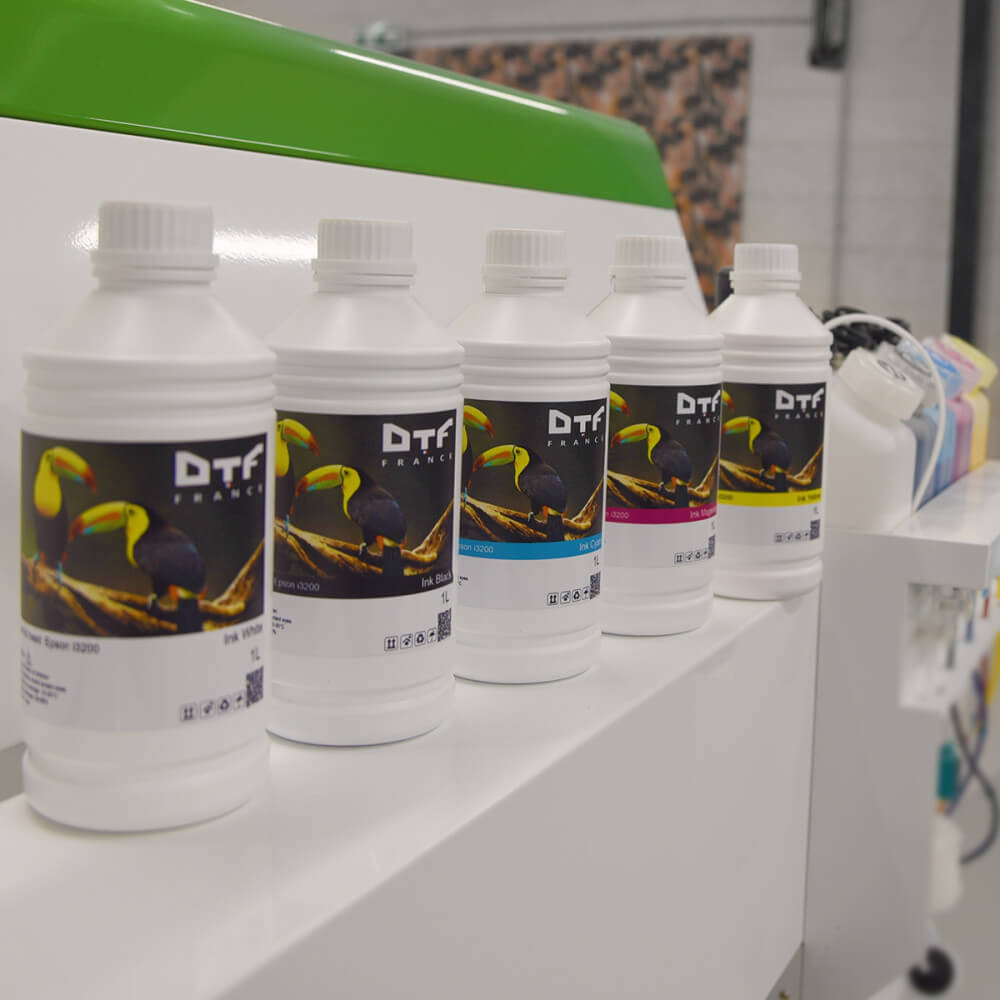
- DTF ink (CMYK + white)
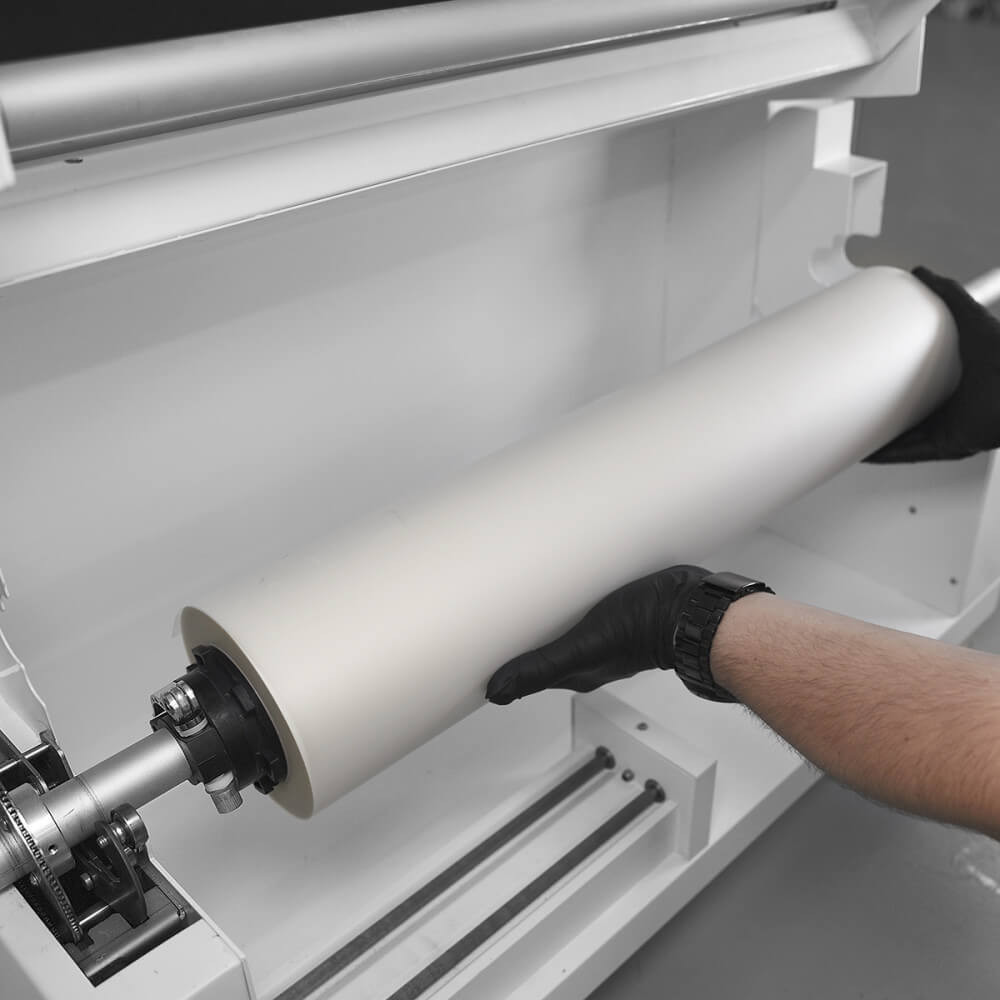
- DTF film (transfer carrier)
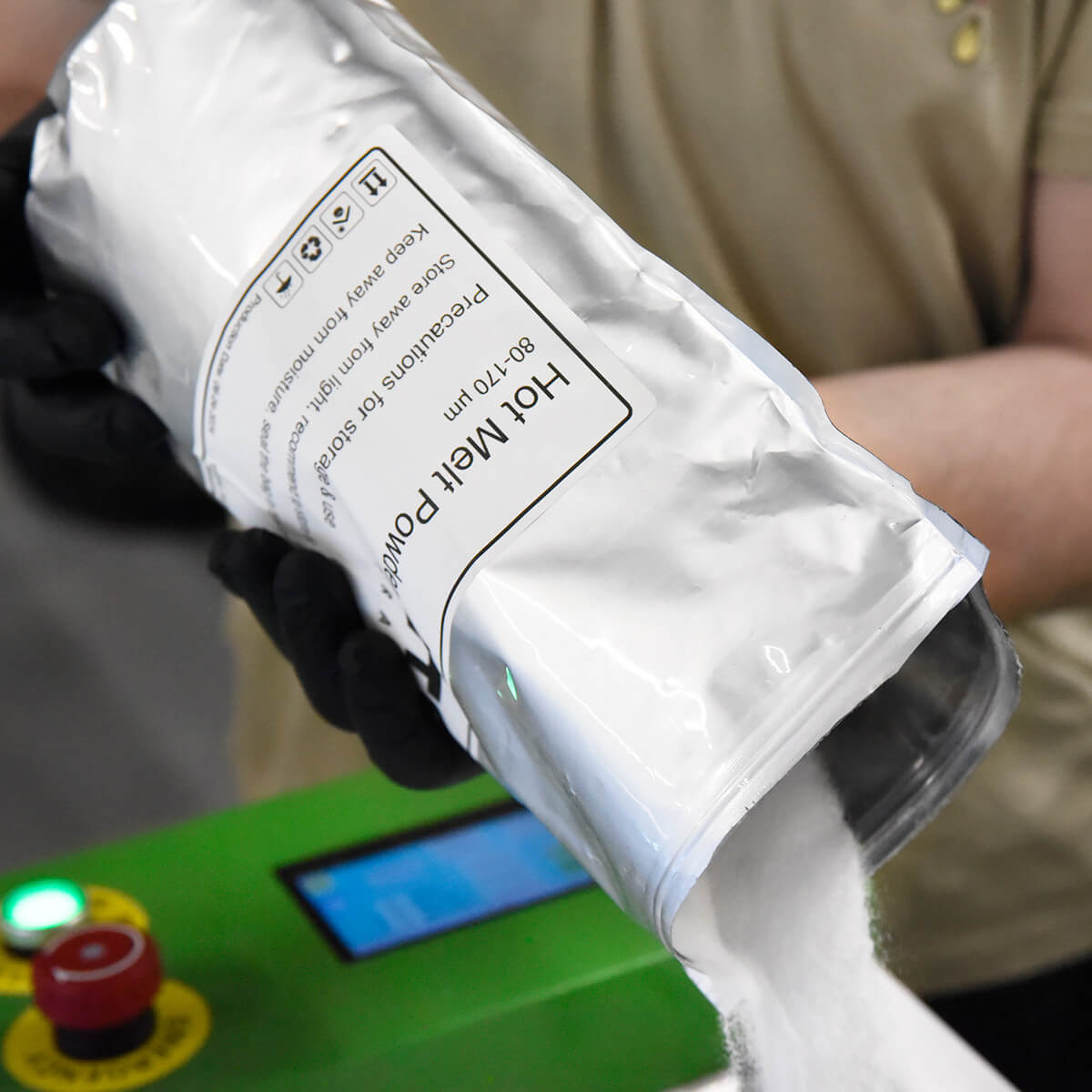
- Hot-melt powder (adhesive)
- Electricity (printer + curing + heat press)
- Labour (operator time)
- Machine wear & maintenance (cleaning, parts)
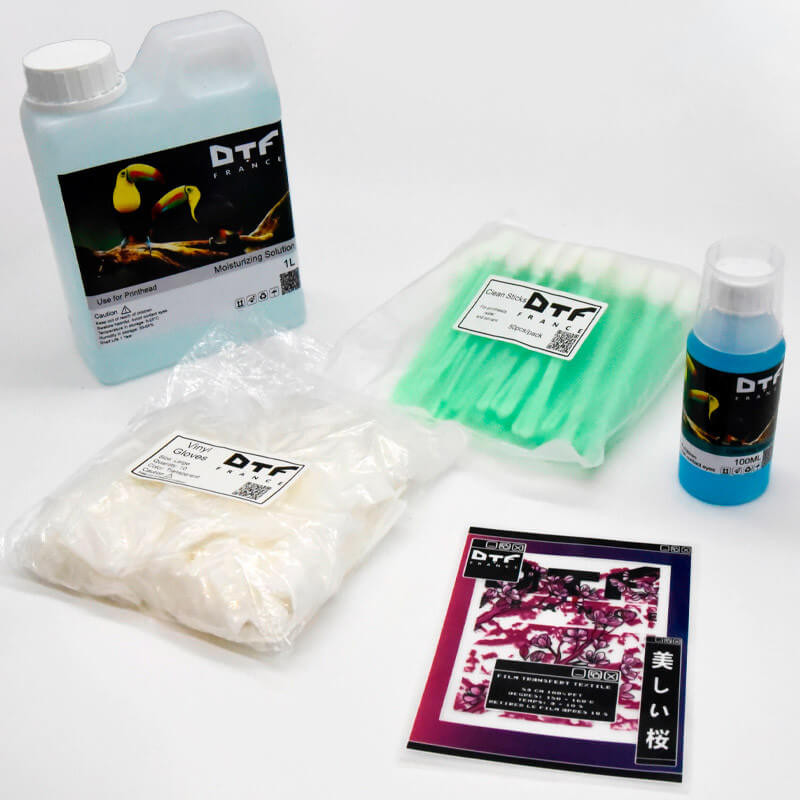
- Secondary consumables (cleaners, wipes, gloves)
- Waste and scrap (tests, failures, reworks)
What most people forget to include
- File prep time
- Daily printhead cleaning
- Test prints to validate colour
- Machine depreciation
- Customer reprints (even 2–3% changes everything)
Pro tip
Build a realistic waste rate of 5 to 10% into your calculations. That’s what separates a theoretical estimate from a real cost.
DTF ink cost per print
DTF ink is one of the biggest cost lines. But how much does it really cost per garment?
Average ink consumption
Consumption depends on the size and density of the artwork:
- Left-chest logo (10×10 cm): 3–5 ml
- A4 design: 15–25 ml
- A3 design: 35–50 ml
CMYK vs white: a major difference
White ink is used as an underbase for dark garments. It often represents 50–70% of total ink consumption on this type of substrate.
Worked example using DTF-France ink
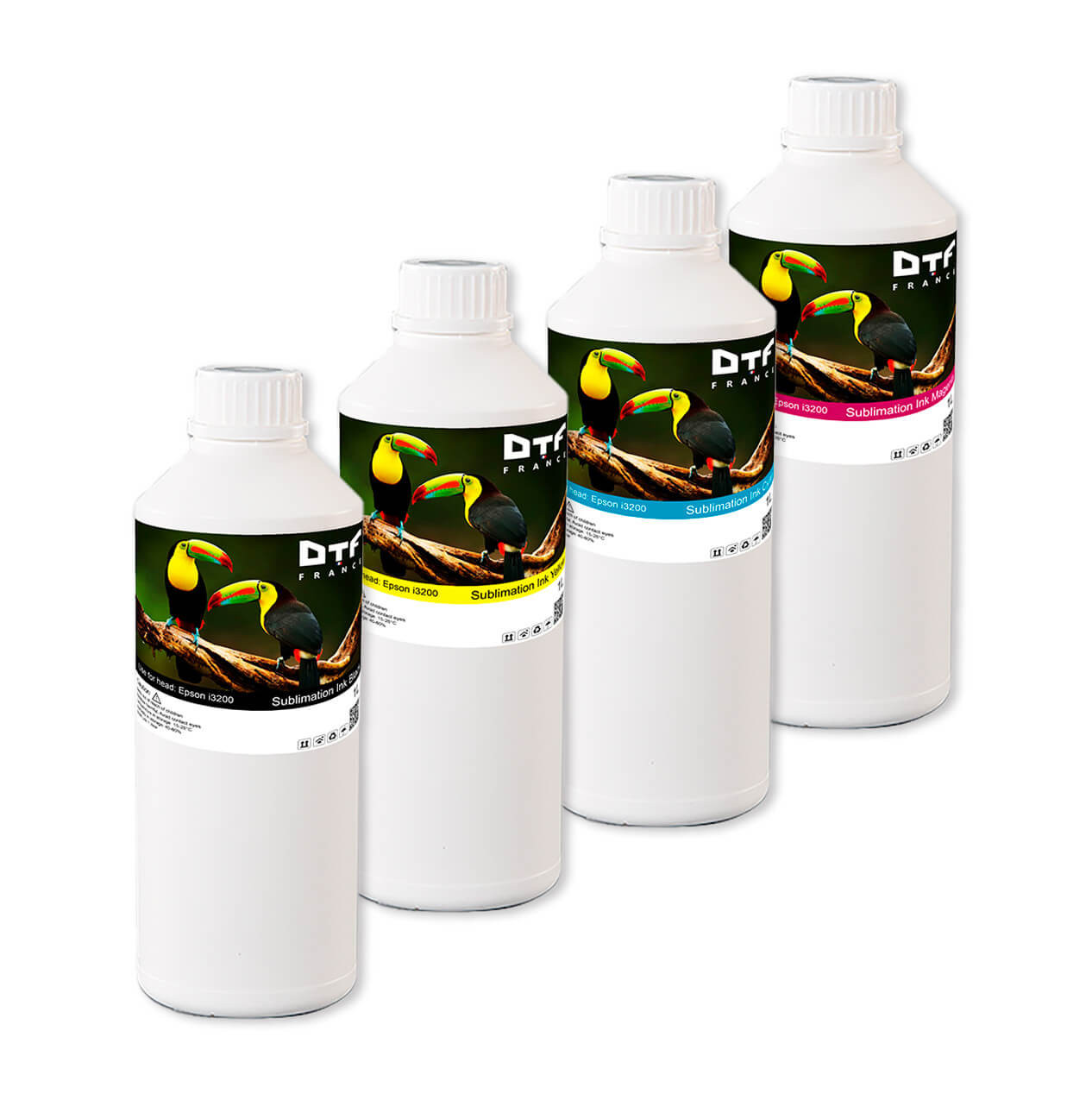
Reference price: White DTF ink 1L at €32.50 ex VAT
- Cost per ml: €0.0325
- Left-chest logo (4 ml): ~€0.13
- A4 design (20 ml): ~€0.65
- A3 design (45 ml): ~€1.46
Pro tip: reduce consumption without losing quality
- Optimise your RIP profiles to avoid over-inking
- Use stable, high-quality ink: fewer clogs and fewer reprints
- Clean printheads regularly: a clean head uses less ink
DTF film cost per garment
DTF film is the carrier that receives the print before it’s transferred onto the garment. Costs vary by format and film type.
Sheet film vs roll film
Roll film offers better yield and less waste. It’s the recommended option for regular production.
Hot peel vs cold peel
- Hot peel: peel while hot, faster workflow
- Cold peel: peel once cool, better results on certain fabrics
The choice indirectly affects cost (production time, finish quality).
Practical calculation with DTF-France film
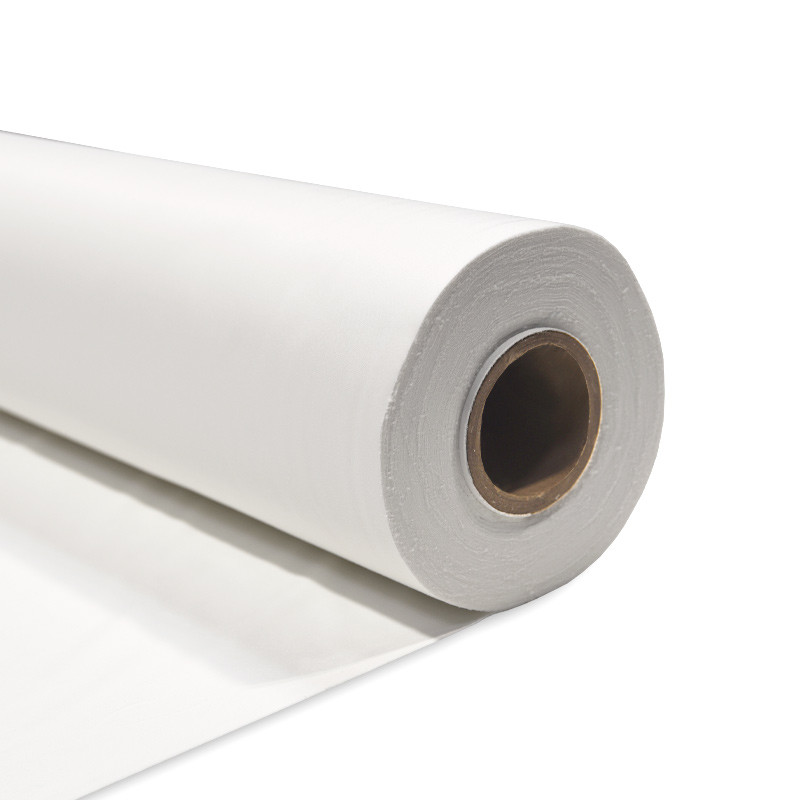
Reference price: DTF film roll 100m × 60cm at €54.17 ex VAT
- Total area: 60 m²
- Price per m²: €0.90
Cost per design:
- Logo 10×10 cm (0.01 m²): ~€0.009
- A4 design (~0.06 m²): ~€0.054
- A3 design (~0.12 m²): ~€0.108
Optimisation
Plan your layout to maximise film usage. Nest multiple designs along the roll length to reduce offcuts.
Hot-melt powder cost
Hot-melt powder (also called adhesive powder) ensures the transfer bonds to the garment. It’s applied to wet ink before curing.
Average powder usage
- Left-chest logo: 2–3 g
- A4 design: 8–12 g
- A3 design: 18–25 g
Impact of waste
Unused powder can be collected and reused. A good recovery system can reduce losses by 30–50%.
Worked example using DTF-France powder
Reference price: Adhesive powder 1kg at €15.83 ex VAT
- Cost per gram: €0.01583
- Left-chest logo (2.5 g): ~€0.04
- A4 design (10 g): ~€0.16
- A3 design (22 g): ~€0.35
Tip
Invest in an effective recovery system. The savings quickly add up to hundreds of euros per month.
Energy cost (printing + curing)
Electricity is often overlooked, but it impacts every print.
DTF equipment power consumption
- DTF printer: 300–500 W while running
- Curing oven: 2,000–3,000 W
- Heat press: 1,500–2,000 W
Usage time per garment
- Printing: 2–5 minutes
- Drying/curing: 3–5 minutes
- Pressing: 15–30 seconds
Realistic estimate
Average business electricity tariff: €0.15 / kWh
Consumption per garment:
- Printer: 0.025 kWh → €0.004
- Oven: 0.10 kWh → €0.015
- Press: 0.01 kWh → €0.0015
Total electricity cost per print: ~€0.02
It may look small, but at 1,000 garments per month, that’s around €20.
Labour: the most underestimated hidden cost
Time is money — and in DTF printing, it’s often miscalculated.
Real time per print
For a standard A4 design:
- File prep + job start: 2 min
- Printing: 3 min
- Powder application + curing: 3 min
- Pressing + QC: 2 min
Total: 10 minutes per garment
Operator hourly cost
A skilled operator typically costs €15–€25 per hour (including employer costs).
Labour cost per garment
- At €15/h: €2.50
- At €20/h: €3.33
- At €25/h: €4.17
Small runs vs continuous production
In small runs, prep time is proportionally higher. In continuous production, you reduce downtime.
Example:
- Single garment: 10 min
- 10 identical garments: 6 min/garment (setup efficiency)
Optimisation
Batch orders by design, automate file preparation, and train operators on efficient workflows.
Maintenance, cleaning and machine wear
A high-performing DTF printer requires regular maintenance. These costs are real and must be included.
Cleaning products
Typical monthly budget: €100–€150 for regular production
Find all maintenance products on DTF-France.com – Maintenance:
- Printhead cleaning fluid
- Technical wipes
- Maintenance solution
Printhead cleaning
- Frequency: daily (light) + weekly (deep)
- Time: 15–30 min per week
- Cost: products + labour ≈ €30/week
Parts wear
- Printheads: replacement every 12–24 months (€1,500–€3,000)
- Pumps, filters, belts: €200–€400/year
Machine depreciation
For a DTF printer costing €15,000 depreciated over 5 years:
Monthly cost: €250
Average monthly maintenance cost
For a production of 500 garments/month:
- Products: €125
- Wear parts: €50
- Depreciation: €250
Total: €425 / month
That’s: €0.85 per garment
At 500 prints per month, maintenance represents €0.85 per garment. This figure decreases as volume increases.
Waste, rejects and reprints: use a realistic rate
Even with a well-tuned machine, DTF waste exists. Ignoring it means your profitability calculation is wrong.
Common sources of waste
- Colour tests before production
- Misprints on film (clogging, banding)
- Pressing errors (temperature, pressure)
- Customer reprints (colour mismatch, defects)
A realistic waste rate
In DTF with quality consumables: 5–10%
In screen printing: often 15–20% (screens, setup, drying time)
Impact on unit cost
Example
If your direct cost is €5 per garment:
- With 5% waste: real cost = €5.25
- With 10% waste: real cost = €5.50
Recommendation
Start by including 7% waste in your calculations, then adjust based on your real-world data.
DTF advantage
DTF has a major advantage: no expensive setup like screen printing. Each failed print costs only consumables, not 30 minutes of setup time.
Final calculation: total cost of a DTF print
Now let’s combine everything to get the true cost of a DTF print.
Summary table: A4 design on a dark garment
| Cost item | Cost per garment |
|---|---|
| Ink (CMYK + white) | €0.65 |
| DTF film | €0.054 |
| Hot-melt powder | €0.16 |
| Electricity | €0.02 |
| Labour (10 min at €20/h) | €3.33 |
| Maintenance & wear | €0.85 |
| Waste (7%) | €0.35 |
| TOTAL | €5.46 |
Worked examples
Left-chest logo (10×10 cm)
| Cost item | Cost |
|---|---|
| Ink | €0.13 |
| Film | €0.009 |
| Powder | €0.04 |
| Electricity | €0.015 |
| Labour | €2.50 |
| Maintenance | €0.85 |
| Waste (7%) | €0.25 |
| TOTAL | €3.79 |
A3 print (29.7×42 cm)
| Cost item | Cost |
|---|---|
| Ink | €1.46 |
| Film | €0.108 |
| Powder | €0.35 |
| Electricity | €0.025 |
| Labour | €3.33 |
| Maintenance | €0.85 |
| Waste (7%) | €0.44 |
| TOTAL | €6.56 |
What these numbers show
Labour accounts for 45–60% of total cost. It’s the biggest lever to optimise.
Consumables (ink, film, powder) often represent only 15–20% of the final cost. That’s why choosing consistent, high-quality consumables is profitable: they reduce waste and maintenance time.
How to reduce your DTF cost without sacrificing quality
Now that you know your true cost, here’s how to optimise it.
 Optimise your DTF printing costs
1. Choose stable, high-performance consumables
Why it pays off:
- Fewer clogs = fewer interventions
- Fewer failures = less waste
- Smoother workflow = optimised consumption
What we recommend:
- DTF ink sets formulated for your printer
- Consistent-quality film (no surprises between rolls)
- Powder with stable particle size
Discover our professional consumables
Guaranteed quality, permanent stock, fast delivery
Visit the shop →2. Reduce waste
- Test your profiles once — not on every order
- Train operators on correct press settings
- Check temperature and pressure regularly
- Maintain daily to keep the printer stable
3. Optimise print settings
- Tune the RIP to avoid over-inking
- Calibrate colour regularly
- Use the right profiles for each garment type
Result: up to 15% ink savings with no quality loss.
4. Buy in volume
The more you buy, the lower your unit price.
Example with our inks
- 1 litre: €32.50/L
- 5 litres: potential saving of 10–15%
Payback: across 1,000 prints, savings add up quickly.
5. Organise production
- Batch orders by colour or design
- Schedule printing to reduce idle time
- Prepare files in advance
Gain: 20–30% less time on small runs.
Quick comparison: DTF vs other techniques
Is DTF really more profitable? Let’s compare it to alternative methods.
DTF vs Screen printing
| Criterion | DTF | Screen printing |
|---|---|---|
| Setup cost | €0 (digital file) | €50–€150 (screens, registration) |
| Small run cost (10 pcs) | ~€5.50 / piece | €8–€12 / piece |
| Medium run cost (100 pcs) | ~€5 / piece | €3–€5 / piece |
| Setup time | 2 min | 30–60 min |
| Quality | Excellent (full colour + gradients) | Good (solid colours) |
| Waste rate | 5–10% | 15–20% |
Verdict
DTF is unbeatable for small and medium runs. It becomes competitive from around 50 pieces thanks to zero setup cost.
DTF vs DTG (Direct to Garment)
| Criterion | DTF | DTG |
|---|---|---|
| Consumables cost | €0.85 / A4 | €1.20 / A4 |
| Pre-treatment | No | Yes (time + cost) |
| Wash durability | Excellent (> 50 washes) | Good (30–40 washes) |
| Textile versatility | All types | Mainly cotton |
| Maintenance | Moderate | High (frequent clogs) |
Verdict
DTF offers better versatility, stronger durability and lower maintenance costs. It’s the most profitable technology for most printers.
Why DTF is winning
- 1. No setup cost → profitable from the first piece
- 2. Higher quality → full colour, gradients, opaque white
- 3. Excellent durability → 50+ washes without cracking
- 4. Versatility → cotton, polyester, blends, technical textiles
- 5. Fast production → ideal for personalisation and e-commerce
Conclusion: control your costs, maximise profitability
You now know how to calculate the true cost of a DTF print.
Key takeaways
- The true cost includes 8 cost items, not just consumables
- Labour represents 45–60% of the total cost
- Waste must be included (around 7% on average)
- A standard A4 design typically costs €5–€6 all-in in an optimised workflow
Why you must think in total cost
Many printers set prices by counting only ink and film. The margin disappears as soon as you factor in real time and maintenance.
Don’t make that mistake. Use this full calculation to set fair, profitable prices.
Take action
- Calculate your own cost using our table (adapt values to your reality)
- Optimise consumables to reduce waste and improve stability
- Need help? The DTF-France team is here to support you
FAQ: your questions about DTF cost
What is the cost of a single DTF print?
For a standard A4 design, expect around €5–€6 all-in (consumables, labour, maintenance, waste). This can drop with an optimised workflow.
A left-chest logo (10×10 cm) costs roughly €3.80, while an A3 print is around €6.50.
Is DTF profitable for small runs?
Yes — absolutely. Unlike screen printing, which requires expensive setup (€50–€150 for screens and 30–60 minutes of registration), DTF is profitable from the first piece.
It’s ideal for:
- One-off personalisation
- Small runs (1–50 pieces)
- E-commerce orders
- Pre-production testing
Is DTF more expensive than screen printing?
On very large identical runs (500+ pieces), screen printing can be slightly cheaper. But DTF remains more profitable for most orders because of:
- No setup cost (€0 vs €50–€150)
- Higher quality (full colour, gradients vs solid colours)
- Lower waste (5–10% vs 15–20%)
- Faster turnaround (no drying time)
For small and medium runs, DTF is consistently more profitable.
How can I reduce my cost per print?
The 3 main levers to optimise costs:
- Optimise labour (organisation, training, batching) → 20–30% savings
- Reduce waste (stable consumables, regular maintenance, training) → 15–20% savings
- Buy in volume (tiered pricing on consumables) → 10–15% savings
By combining these, you can often cut costs by 30–40% without sacrificing quality.
How long does a DTF print last?
A properly produced DTF print typically withstands 50+ washes without cracking or fading.
That’s better than DTG (30–40 washes) and comparable to professional screen printing.
Key durability factors:
- Consumables quality (ink, powder, film)
- Press settings (temperature, pressure, time)
- Garment type (cotton, polyester, blends)
- Garment care (wash inside out, avoid high-heat tumble drying)
What production volume do I need for DTF to be profitable?
DTF is profitable from the first print. Unlike other methods, there’s no minimum volume threshold.
Profitability by volume:
- 1–10 pieces: very profitable (no setup)
- 10–100 pieces: optimal (quality + speed)
- 100–500 pieces: competitive vs screen printing
- 500+ pieces: DTF and screen printing can be similar (depends on the artwork)
The initial investment in a DTF printer is often covered from around 200–300 prints per month.
Contrary to common belief, DTF unit costs decrease noticeably with volume thanks to optimised machine time, labour efficiency and bulk purchasing — even if some material costs remain fixed per print.
Share
0 comment(s)